
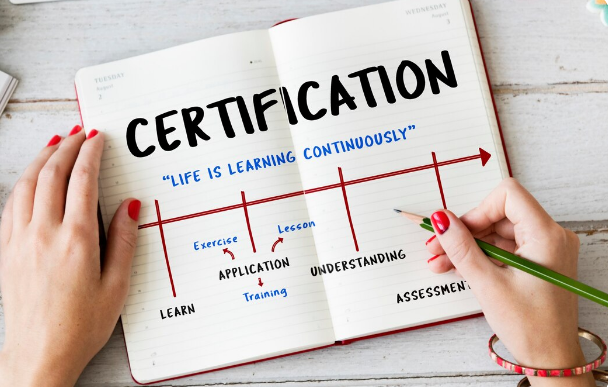

Project managers often hit career ceilings and fail to make executive leaps by relying on single, high-level credentials. This roadmap solves the skill gap through a four-stage certification progression, building governance, financial oversight, and board-level influence sequentially for sustained career advancement.
Key Takeaways
- Sequential Progression: Directorial advancement requires a strategic four-stage certification progression rather than skipping straight to top-tier credentials
- Skillset Transformation: Enterprise program leadership shifts focus from project scope to board-level reporting, benefits realization, and portfolio prioritization
- Career Timeline: Completing this structured roadmap in 18–30 months builds the layered governance capabilities expected by executive boards
Every project manager hits a ceiling, where delivering one project well no longer satisfies the mandate. For them, upskilling and advancing to higher positions like enterprise program directors is the only suitable option.
These directors don’t just execute; they govern initiative portfolios, own strategic value, and answer directly to boards. But getting there isn’t automatic. It’s a certification-based skills progression. And this blog will present that progression roadmap.
Why the Jump Isn’t Just a Promotion
Project managers optimize scope, schedule, and budget for a single initiative. Enterprise program directors coordinate dependencies across dozens of projects, own benefits realization, and report to executive sponsors.
You might have considered making this leap by chasing a single high-profile credential. Often opting for a PgMP certification without building the layered governance, financial oversight, and stakeholder-influence skills the role actually demands.
The Four-Stage Certification Roadmap
Follow the stages below to climb the career steps by making yourself skillful enough to match the final director role.
- Foundation – Project Management Certification (PMC): Validates core planning, execution, and control skills every director needs as a baseline.
- Directorial Authority – Global Project Director Credential (GPDC): Builds executive oversight, multi-region governance, and crisis leadership for large, complex initiatives.
- Program Governance – Professional in Program Management (PPgM): Develops benefits realization, dependency management, and program-level stakeholder leadership.
- Enterprise Oversight – Professional in Portfolio Management (PPfM): The terminal step, teaching prioritization, investment governance, and enterprise resource allocation, effectively a portfolio management certification for director-level roles.
| Stage | Recommended Certification | Core Focus | Typical Candidate |
| 1 | PMC (Project Management Certification) | Project planning, execution, and control | Project Managers formalizing fundamentals |
| 2 | GPDC (Global Project Director Credential) | Executive governance, multi-region delivery, risk oversight | Senior PMs stepping into director-level authority |
| 3 | PPgM (Professional in Program Management) | Program governance, benefits realization, dependency management | Directors coordinating multiple related projects |
| 4 | PPfM (Professional in Portfolio Management) | Portfolio prioritization, investment governance, enterprise alignment | Program leaders advancing to enterprise portfolio oversight |
Table 1: Certification Roadmap
Closing the Skills Gap
The technical skills that make a good project manager rarely transfer directly to enterprise governance. The table below maps where the gap actually sits for you to understand the career path better.
| Project Manager Skill | Enterprise Program Director Skill |
| Scope and schedule control | Cross-program dependency and benefits governance |
| Team-level stakeholder updates | Board-level reporting and executive influence |
| Single-project risk registers | Enterprise risk aggregation and mitigation strategy |
| Task-level budget tracking | Portfolio investment prioritization and value realization |
Table 2: The Skill Differences Between the Two Stages
💡PRO TIP
Don’t skip the directorial stage. Professionals who jump straight from project-level certification to program credentials often struggle with executive stakeholder management, a competency GPDC builds specifically through board-level reporting and crisis leadership modules before program-scale governance is introduced.
Sequencing Your Path – Timeline and Milestones
Most professionals complete this roadmap in 18–30 months, working one credential at a time while applying new skills on the job. PMC typically takes 6–8 weeks of preparation; GPDC and PPgM each demand deeper case-based study given their scenario-heavy exams.
Professionals already holding a PgMP certification from another body can use PPgM to formalize enterprise-specific governance practices rather than repeating foundational program theory.
📝 USE CASE
A senior IT project manager overseeing a single ERP rollout used the GPDC-to-PPgM sequence to move into a transformation program director role, taking on three concurrent digital initiatives and reporting benefits realization directly to the CIO within 14 months.
Governance, Stakeholders, and the Enterprise Mindset
Enterprise program directors spend more time managing upward and outward than managing tasks. Board reporting, cross-functional negotiation, and investment justification dominate the role.
Building this mindset early, instead of after promotion, is why sequencing a portfolio management certification like PPfM after program-level credentials matters. It is because it forces prioritization thinking before handing over competing investment decisions to directors.
⚠️ CAUTION
Governance frameworks vary by industry. A director moving from IT into infrastructure or healthcare should validate that portfolio prioritization criteria, compliance requirements, and stakeholder structures are re-mapped to the new sector rather than assuming prior program governance experience transfers unchanged.
📝 USE CASE
A healthcare PMO lead pursued PPfM after two years managing a clinical systems program, gaining the prioritization framework needed to sit on the enterprise investment committee and defend portfolio trade-offs directly to the hospital board.
Conclusion
The path from project manager to enterprise program director isn’t a single exam; it’s a sequence of governance, program, and portfolio competencies built deliberately.
Structuring your certifications around this roadmap, rather than chasing one prestige credential, gives you the layered skill set boards actually expect from program leadership.
Be an Enterprise Program Director with the Right Practical Skills
Get certified and gain skills, not just theoretical ideas, that you can implement in real life at your workplace to upgrade your job role and responsibilities. Join a certification program now!