


Introduction:
When people search for Wanton Bridge, they may be trying to find an old bridge, learn about its history, or understand where it was located. The name is connected with an important crossing over the Sakonnet River in Rhode Island. However, the story is not limited to one bridge. It also includes an early ferry service, a stone structure built in the 18th century, several rounds of repairs, and the later construction of a modern highway bridge.
The old crossing played an important role in connecting communities on both sides of the river. Before bridges became part of everyday travel, people depended on ferries to move across the water. Building a permanent crossing changed how people travelled and transported goods in the area.
Today, the historic Stone Bridge is no longer standing as it once did. Its history is still connected with Tiverton, Portsmouth, and the Sakonnet River. To understand Wanton Bridge, it helps to look back at the ferry crossing that came before it and the changes that took place over the following centuries.
Where Was Wanton Bridge Located?
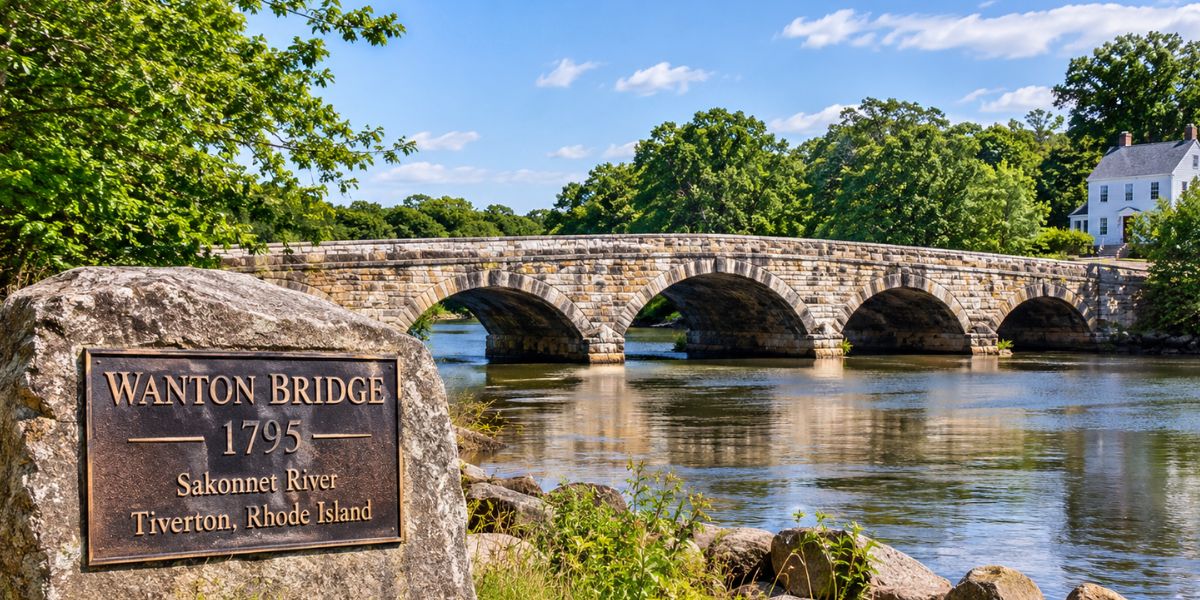
The historic crossing associated with Wanton Bridge was located over the Sakonnet River in Rhode Island, between the Tiverton and Portsmouth areas. The river forms part of the boundary between these communities and has long been an important part of local transportation.
Before the construction of a permanent bridge, crossing the river was not as simple as driving across a road. Residents and travellers needed a way to move people, animals, and goods from one side to the other. Ferry services provided that connection for many years.
The area later became known for the Stone Bridge, which was built in the late 18th century. It replaced the earlier ferry crossing and became a major route for people travelling through the region.
It is worth making one distinction here. Wanton Bridge, Wanton’s Ferry, and Stone Bridge are names connected with the history of this crossing, but they should not automatically be treated as the name of one surviving modern structure. The historic story developed over several stages, and the names reflect different parts of that history.
The Early History of Wanton’s Ferry
Long before the Stone Bridge was built, ferries were used to cross the Sakonnet River. One of the early services associated with the area was Howland’s Ferry, which was operating by 1640 according to the Newport Historical Society.
Ferries were an important part of life in early Rhode Island. Roads were not always convenient, and travelling around the river could take much longer than crossing it directly. A ferry offered a practical way to connect settlements and make local travel easier.
Historical records also connect this crossing with other names, including Wanton’s Ferry, Pocasset Ferry, and Sanford’s Ferry. These names help show how the crossing was known and used at different points in its history.
The ferry was more than a way for people to get from one riverbank to another. It supported everyday movement between communities. Farmers, traders, residents, and other travellers depended on crossings like this when roads and transport options were limited.
As the area developed, the need for a more dependable connection became increasingly important. A ferry could serve local needs, but it depended on operating conditions and could not offer the same continuous road connection as a bridge. This created a reason to consider a permanent structure.
When Was the First Stone Bridge Built?
A major change came in 1795, when the Stone Bridge was completed across the Sakonnet River. The bridge was designed by Zenas Whiting and measured approximately 900 feet in length. It was built using stone and timber and replaced the ferry as the main crossing.
For its time, the project was a significant improvement. Instead of waiting for a ferry, travellers could use a fixed route across the river. This made the crossing more convenient and helped strengthen the connection between nearby communities.
The bridge was not a simple structure that could remain untouched for generations. It had to deal with weather, water, and the conditions of the river. Over time, storms and other damage created the need for repairs and rebuilding.
Still, the 1795 bridge marked an important point in the area’s transportation history. It represented a shift from a ferry-based crossing to a permanent route.
Why Was Stone Bridge Important to Rhode Island?
Stone Bridge mattered because it provided a direct connection between places that were separated by the Sakonnet River. For people living in the surrounding communities, that connection made travel more practical.
Think about what crossing a river meant during the 18th and 19th centuries. There were no modern cars, navigation apps, or large highway bridges. People travelled using horses, carts, wagons, and other methods. A dependable bridge could save time and make regular journeys easier.
The bridge also supported local trade and movement. People could transport goods without depending entirely on ferry operations. This was especially useful for communities where travel across the river was part of everyday life.
Its importance was not only practical. The bridge became part of the area’s local history. It represented the development of transportation in Rhode Island and showed how communities adapted as travel needs changed.
Storm Damage and Rebuilding Over the Years
One of the most interesting parts of the Stone Bridge story is how often it needed repairs. The structure faced repeated damage from storms and difficult weather conditions. The Newport Historical Society reports that the bridge was damaged or washed out at least a dozen times.
That gives a better idea of the challenges involved in maintaining a bridge over the river. Building a crossing was one thing; keeping it usable year after year was another.
Each major repair or reconstruction reflected the need to maintain a reliable route. The bridge changed over time rather than remaining exactly as it had been when first completed in 1795.
This is also why historical descriptions of Stone Bridge may refer to different designs and construction periods. The original stone-and-timber bridge was not necessarily identical to the structure that people saw in the early 20th century.
The Major Reconstruction Between 1905 and 1907
One of the important rebuilding periods took place between 1905 and 1907. During this work, the crossing was reconstructed with a stone causeway and truss spans.
Historical preservation records describe eight truss spans, each approximately 45 feet long, along with a central draw span of around 100 feet. The draw span was an important feature because it allowed boats to pass through the crossing.
This version of the bridge reflected the transportation and engineering needs of its time. It was different from the original structure built more than a century earlier, but it continued the same purpose: providing a connection across the Sakonnet River.
The reconstruction also shows how much the crossing had changed since the days of the early ferry. What began as a ferry route had become a substantial bridge with several structural elements.
Even after the reconstruction, the bridge’s future was not guaranteed. The river and weather continued to create challenges, and transportation requirements were changing as well.
What Happened to Wanton Bridge?
The historic Stone Bridge was eventually replaced by a modern highway bridge. The new Sakonnet River crossing opened on September 25, 1956, according to historical information from the U.S. Army Corps of Engineers.
Some historical accounts describe the old bridge’s final retirement or replacement in 1957, while other records refer to the new crossing opening in 1956. These dates relate to the transition from the old structure to the newer bridge, and they should not be confused as evidence of two completely separate replacement projects.
The old Stone Bridge was removed in 1956, according to the Army Corps of Engineers. This meant that the historic structure that had served the area for many years was no longer available as a road crossing.
The modern Sakonnet River Bridge took over the transportation role. It was designed for the needs of a different period, when road traffic and vehicle travel had become much more common.
For this reason, anyone searching for Wanton Bridge today should understand that the historic bridge is not the same as the modern Sakonnet River Bridge. The two are connected through the history of the crossing, but they belong to different periods.
Wanton Bridge Today: Can You Still See the Historic Site?
Although the old Stone Bridge no longer stands in its original form, parts of its history remain connected with the surrounding area. Historic stone abutments survive near the former bridge location. These remains provide a physical reminder of the structure that once crossed the river.
The area around Stone Bridge Pier and Grinnell’s Beach is also of interest to people exploring this part of Tiverton. The Town of Tiverton identifies Grinnell’s Beach as being just south of Stone Bridge Pier and notes that fishing is available there.
Visitors should remember that the historic remains are not the same as a complete preserved bridge. It is better to approach the location as a historic river crossing site rather than expect to find the original 1795 structure still standing.
If you plan to visit, check local information before travelling. Access, parking, and public-use arrangements can change. Respect any signs or restrictions around historic remains and nearby public areas.
Wanton Bridge and the Modern Sakonnet River Bridge
The modern Sakonnet River Bridge continues to serve an important transportation purpose in Rhode Island. It provides a road connection across the river and reflects how travel has changed since the days of ferries and stone bridges.
The historic Stone Bridge and the modern bridge should be understood as two stages in the development of the same general crossing area. The older structure was built when a permanent bridge was a major improvement over ferry travel. The modern crossing was developed for a period when vehicle traffic required a different kind of infrastructure.
This change is common in transportation history. Roads, bridges, and ferry services are often replaced when communities grow and travel demands increase. An older structure may disappear, but its role in the development of the area remains important.
For local history enthusiasts, the story of Wanton Bridge is a useful example of how one crossing can change over several centuries.
A Short Timeline of Wanton Bridge History
The following timeline brings together the main events connected with the historic crossing:
- By 1640: Howland’s Ferry was operating in the area.
- Later historical periods: The crossing was also associated with names such as Wanton’s Ferry, Pocasset Ferry, and Sanford’s Ferry.
- 1795: The Stone Bridge, designed by Zenas Whiting, was completed.
- Over the following years: Storms and other damage led to repeated repairs and rebuilding.
- 1905–1907: A major reconstruction added a stone causeway, truss spans, and a central draw span.
- 1956: The modern Sakonnet River Bridge opened, and the old Stone Bridge was removed.
- Today: Historic remains, including stone abutments, are still associated with the former crossing area.
Frequently Asked Questions About Wanton Bridge
Where was Wanton Bridge located?
Wanton Bridge is associated with the historic crossing of the Sakonnet River between the Tiverton and Portsmouth areas of Rhode Island. The crossing later became known for the Stone Bridge.
Was Wanton Bridge the same as Stone Bridge?
The names are connected with the history of the same general crossing. Historical records also refer to Wanton’s Ferry and other ferry names. It is important to distinguish the early ferry service, the historic Stone Bridge, and the modern Sakonnet River Bridge.
When was Stone Bridge in Rhode Island built?
The Stone Bridge was completed in 1795. It was designed by Zenas Whiting and built using stone and timber.
What was there before Stone Bridge?
Ferry services operated before the permanent bridge was built. Howland’s Ferry was operating by 1640, and the crossing was also associated with names such as Wanton’s Ferry, Pocasset Ferry, and Sanford’s Ferry.
Why was Stone Bridge rebuilt?
The bridge experienced repeated damage from storms and other difficult conditions. Historical accounts report that it was damaged or washed out many times, leading to repairs and major reconstruction.
What happened to the old Stone Bridge?
The old Stone Bridge was replaced by the modern Sakonnet River Bridge. The newer crossing opened in September 1956, and the historic bridge was removed that year according to the U.S. Army Corps of Engineers.
Can visitors see the old Wanton Bridge today?
The original bridge is no longer standing as a complete structure. However, historic stone abutments remain near the former crossing area. Stone Bridge Pier and nearby Grinnell’s Beach are also local points of interest.
Is the Sakonnet River Bridge the same as the old Stone Bridge?
No. The modern Sakonnet River Bridge replaced the historic Stone Bridge. They are connected through the history of the crossing, but they are different structures built in different periods.
Conclusion
The history of Wanton Bridge is really the story of how a river crossing developed over time. It began with ferry services that helped people travel between communities on opposite sides of the Sakonnet River. Howland’s Ferry was operating by 1640, and other names, including Wanton’s Ferry, became connected with the crossing.
The completion of Stone Bridge in 1795 brought a major change. It provided a permanent route where travellers had previously depended on ferry services. The bridge faced repeated storm damage and went through several changes, including a major reconstruction between 1905 and 1907.
Eventually, the needs of modern road travel led to its replacement. The Sakonnet River Bridge opened in 1956, and the old Stone Bridge was removed. Although the historic structure is gone, stone remains and the surrounding area still connect visitors with this part of Rhode Island’s past.
For anyone interested in local history, Wanton Bridge offers more than the story of an old structure. It shows how transportation, engineering, and community life changed over several centuries.
Historical Sources and Further Reading
The following sources provide additional information about the ferry crossing, Stone Bridge, and the development of transportation around the Sakonnet River:
- Newport Historical Society – History Bytes: Tiverton Stone Bridge
- Town of Tiverton – Stone Bridge
- U.S. Army Corps of Engineers – Sakonnet River
- Rhode Island Historical Preservation – Portsmouth Survey
- Rhode Island Historical Preservation – Tiverton Survey
- Roger Williams University – Stone Bridge Reimagined