


The internet has a funny way of making everyday things complicated. One minute, you’re browsing a website in your favourite café, and the next, you’re dealing with suspicious login alerts, endless CAPTCHA checks or a streaming service that suddenly decides you’re in the wrong country. Convenient, isn’t it?
That’s one reason VPNs have become increasingly popular. They can add privacy to everyday browsing, protect traffic on unfamiliar networks and help users access online services while travelling. The tricky part is finding one that does the job without turning a simple connection into a monthly expense packed with features nobody asked for.
Mysterium VPN is one option worth examining, particularly for people who want something a little different from the usual subscription-based services. But beyond the promises and technical details, how does it fit into everyday internet use?
What Makes a VPN Worth Considering?
A decent VPN should be relatively easy to use, offer reliable connections and provide meaningful privacy protections. Fancy features are nice, but they don’t count for much if the connection keeps dropping halfway through a video call.
One interesting development in the VPN market is the growing use of residential IP addresses. Unlike the addresses commonly associated with commercial VPN servers, residential IPs resemble those used by ordinary home internet connections.
Why does that matter? Some websites automatically flag traffic from familiar VPN servers, resulting in blocked pages or repeated verification requests. A residential IP can sometimes reduce those problems, although it won’t bypass every restriction.
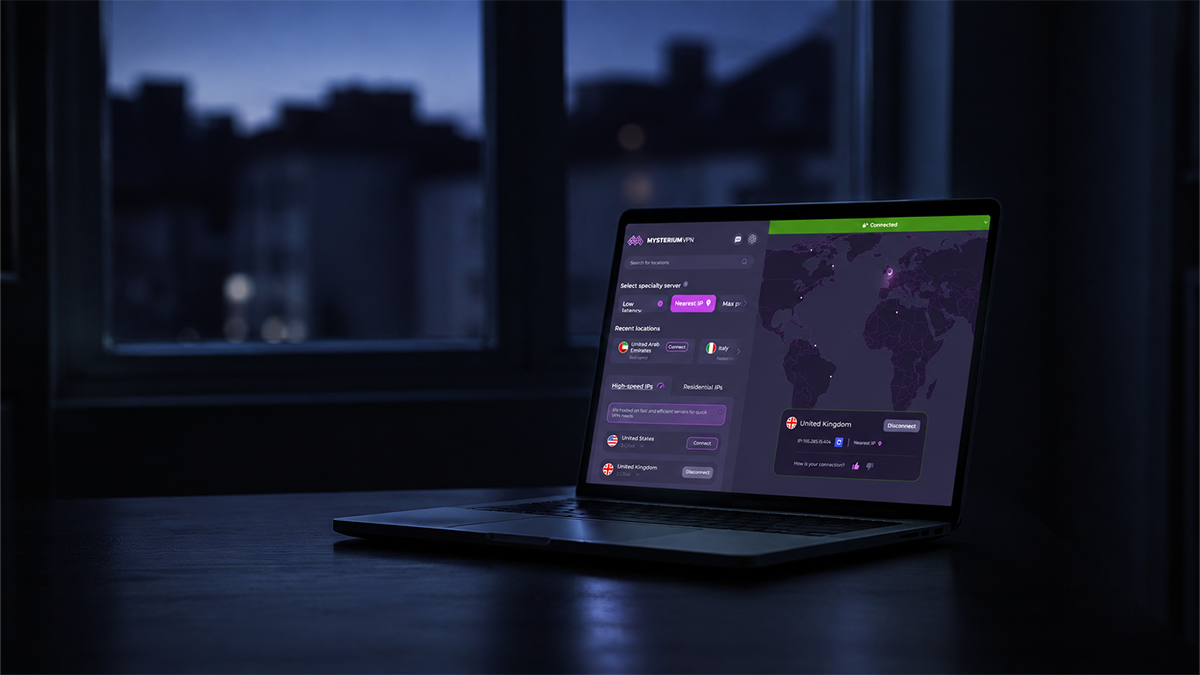
Mysterium VPN uses a decentralized network of independently operated nodes, offering access to residential IPs across more than 100 countries. Its advertised network includes over 7,500 residential IPs, giving users multiple locations to consider.
For someone who travels frequently or encounters location-related restrictions, that flexibility could be useful. However, actual availability depends on the network, and individual websites can still block connections when they choose.
Security Without Unnecessary Complexity
Online privacy isn’t only about hiding an IP address. It’s also about protecting information while it travels between a device and the internet.
A VPN encrypts that traffic, making it harder for outsiders on the network to read the information being transmitted. This is particularly useful when connecting to public Wi-Fi in hotels, airports or busy cafés.
The kill switch is another practical addition. If the VPN connection unexpectedly fails, it can block internet access rather than allowing traffic to continue through the regular connection.
The service also states that it follows a no-logs approach. Privacy-conscious users should still read the current policy and look for independent security assessments before relying on any provider for particularly sensitive activity.
It’s worth keeping expectations realistic, too. A VPN won’t stop every advertisement, prevent phishing or make someone invisible online. It’s one useful part of a broader approach to digital security, not a magic shield against everything the internet can throw at you.
Everyday Performance and Compatibility
Speed is often the first thing people notice when trying a VPN. A small delay might not matter when reading the news, but buffering during a film or lag during an online match can quickly become irritating.
Connection performance depends on several factors, including the distance to the chosen location, available bandwidth and network congestion. Residential connections can offer useful flexibility, but they aren’t automatically faster than conventional VPN servers.
The sensible approach is to test a few nearby locations and compare results with the VPN switched off. That gives a more realistic picture than relying on impressive numbers from a marketing page.
Compatibility is another consideration. The service supports Windows, macOS, Android and iOS, with browser extensions available for Chrome, Brave, Opera and Opera GX. It also advertises up to 15 simultaneous devices on eligible plans.
That allowance can be handy for households with several phones, laptops and tablets. Still, browser extensions may protect only the relevant browser traffic, so users should check exactly what’s covered rather than assuming every application is protected.
Pricing: Look Beyond the Monthly Figure
VPN subscriptions can be surprisingly confusing. A provider advertises a tiny monthly price, but that figure might require paying for an entire year or longer upfront. Suddenly, the total looks rather different.
When comparing plans, it’s worth checking the full payment amount, renewal price, included features and cancellation conditions. A money-back guarantee can also make trying a service less risky, provided the purchase meets the stated requirements.
Refund policies vary between VPN providers, so it’s worth checking the terms before committing to a subscription. For example, Mysterium VPN offers a money-back guarantee of up to 30 days, subject to its refund conditions. Comparing these policies can help users choose a service that gives them enough time to decide whether it’s the right fit.
Ultimately, value depends on personal needs. Someone who mainly wants basic protection on public Wi-Fi may be perfectly happy with a straightforward VPN. Someone who regularly encounters blocked IP addresses or needs greater flexibility with online locations may appreciate a residential network more.
There’s no point paying extra for capabilities that won’t make a noticeable difference to everyday browsing.
What Should Potential Users Keep in Mind?
No VPN is flawless, and a decentralized network comes with its own considerations. Because connections rely on independent operators, performance and availability can vary between locations.
Residential IP addresses also don’t guarantee access to every streaming platform or restricted website. Services change their blocking methods regularly, so yesterday’s working connection might not work tomorrow.
Users should also understand the provider’s privacy arrangements, including how network operators participate and what information may be processed. These details matter just as much as encryption claims.
For competitive gaming, checking latency is particularly important. A connection routed through a distant location might introduce enough delay to affect gameplay, even if ordinary browsing feels perfectly smooth.
Those aren’t necessarily deal-breakers. They’re simply reasons to test a service against real needs rather than assuming every advertised feature will deliver the same results for everyone.
Final Verdict
Mysterium VPN brings a different approach to an increasingly crowded VPN market, particularly through its use of a decentralized network and residential IP addresses. Those characteristics may appeal to travellers, privacy-conscious users and people who frequently run into website restrictions.
Its support for major desktop and mobile platforms, modern encryption technology and multiple simultaneous devices adds practical value. On the other hand, connection performance can vary, access to restricted websites isn’t guaranteed, and subscription conditions deserve a careful read.
For someone looking for basic browsing protection, a conventional alternative might be sufficient. For those who need more flexibility with IP addresses and online locations, this service is worth investigating.
The best way to choose is to identify the problem that needs solving, compare a few providers and test the one that looks most suitable.
What matters most to you when choosing a VPN: reliable speeds, privacy, price or fewer annoying website restrictions? Share your experience in the comments. Sometimes, the most useful advice comes from people who’ve already discovered what works and what doesn’t.