

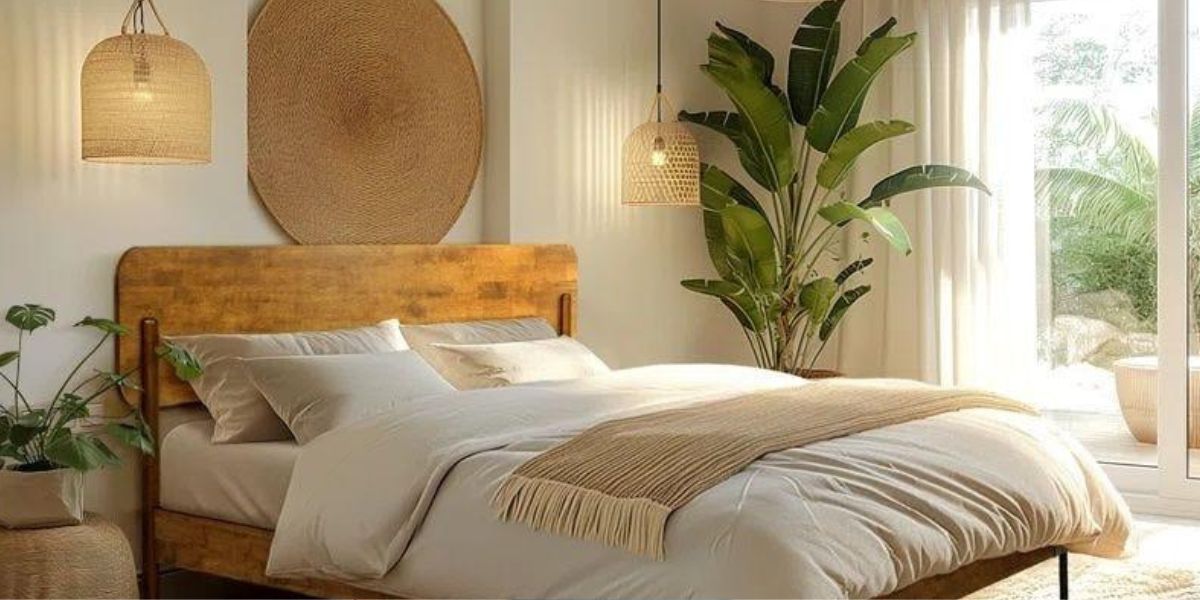

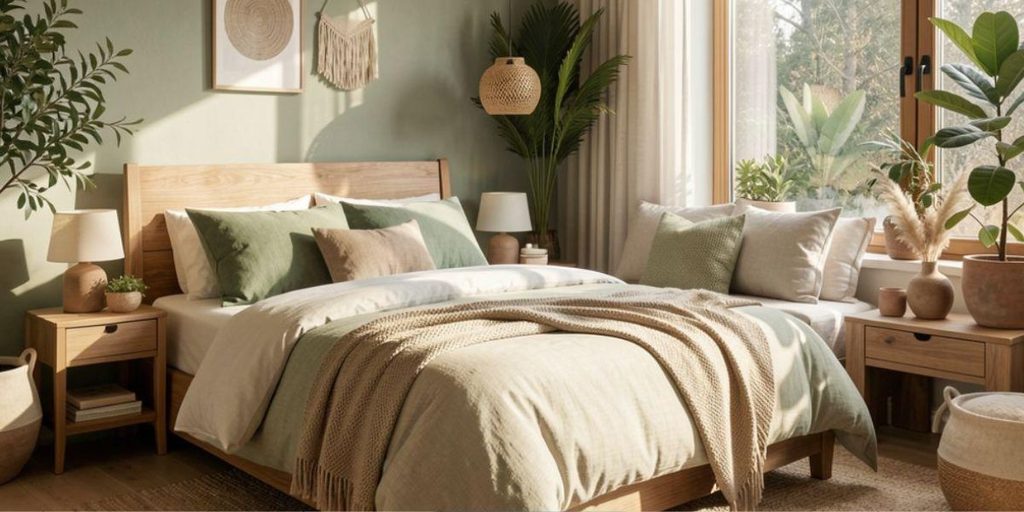
A bedroom should feel comfortable, personal, and easy to relax in. One simple way to create that atmosphere is to introduce greenery through indoor plants, botanical prints, green bedding, and natural materials. You do not need a large room or an expensive makeover to achieve the look. A few thoughtful changes can make an ordinary bedroom feel fresh and inviting.
Greenery bedroom ideas work with many decorating styles, including modern minimalism, boho interiors, Scandinavian design, and rustic bedrooms. You can use a single leafy plant as a focal point or combine several shades of green with wood, linen, and warm lighting.
The key is to create a balanced space rather than filling every corner with plants. In this guide, you will discover 15 practical greenery bedroom ideas, tips for small rooms, color combinations, and ways to create a nature-inspired bedroom that suits your budget and lifestyle.
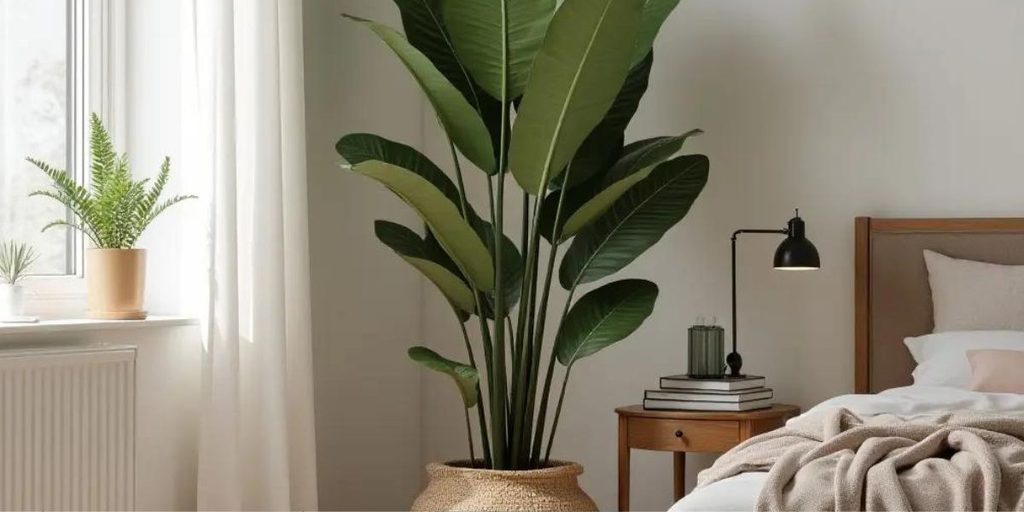
1. Add a Statement Plant to an Empty Corner
maggiemeadow.com
An empty bedroom corner can make the entire room feel unfinished. A tall indoor plant provides height, texture, and a natural focal point without requiring additional furniture.
Choose a plant that suits the amount of daylight your bedroom receives. A tall plant with an upright shape can work well beside a dresser, near a bright window, or in an unused corner. Place it in a woven basket or a simple ceramic planter that complements the room’s existing colors.
For a cohesive look, combine the plant with neutral bedding, wooden furniture, and soft curtains. These materials let the leaves stand out without making the room feel overdecorated.
If your bedroom is small, check the plant’s mature width before buying it. A plant that looks compact in a store may eventually block a walkway or take up too much floor space. Keep the area around the bed and wardrobe easy to access.
Styling tip: Start with one statement plant and live with the arrangement before adding more greenery. This helps you decide whether the room needs more plants or just a better layout.
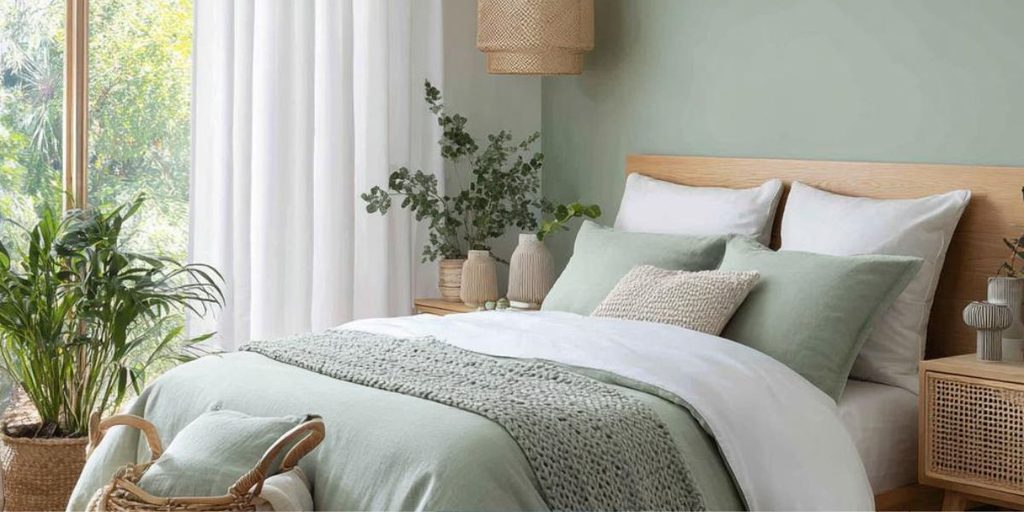
2. Create a Sage Green and Cream Bedroom
histoiressingulieres.fr
Sage green is a popular choice for a soft, nature-inspired bedroom because it pairs easily with warm neutrals. Instead of repainting every wall, introduce sage through cushions, a duvet cover, curtains, or a throw blanket.
Cream bedding balances the green and keeps the room looking light. Natural wood furniture adds warmth, while small black or brass details can provide contrast without overpowering the palette.
This combination works especially well in bedrooms that receive plenty of daylight. In rooms with limited natural light, choose lighter shades of sage and cream to maintain an airy appearance.
You can also introduce real plants to connect the color scheme with nature. A small plant on a dresser or windowsill may be enough to complete the look.
Styling tip: Use sage green as the main accent, cream as the base, and wood as the supporting material. Repeating these three elements throughout the room creates a coordinated design.
3. Hang Trailing Plants Near a Window
wardrobe-sangetsu.jp
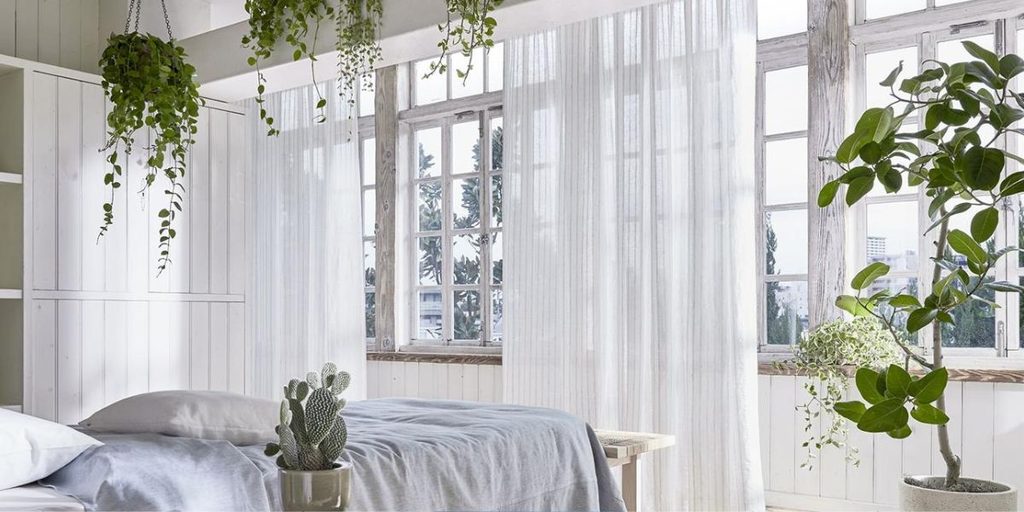
Trailing plants can soften the straight lines of windows, shelves, and furniture. Their hanging leaves introduce movement and draw attention upward, which can make a bedroom feel more layered.
A hanging planter near a bright window is one option, while a trailing plant on a securely mounted shelf offers a similar effect. Choose the location according to the plant’s light requirements rather than appearance alone.
Avoid placing hanging pots directly above the bed or where they could interfere with curtains, windows, or walking areas. Watered containers can be heavier than expected, so use mounting hardware designed to support their full weight.
Renters can consider freestanding plant stands or existing shelves if drilling is not permitted.
Styling tip: Keep the surrounding decor simple. One trailing plant against a neutral wall often creates a cleaner look than several overlapping arrangements.
4. Use Botanical Bedding for an Easy Refresh
bol.com
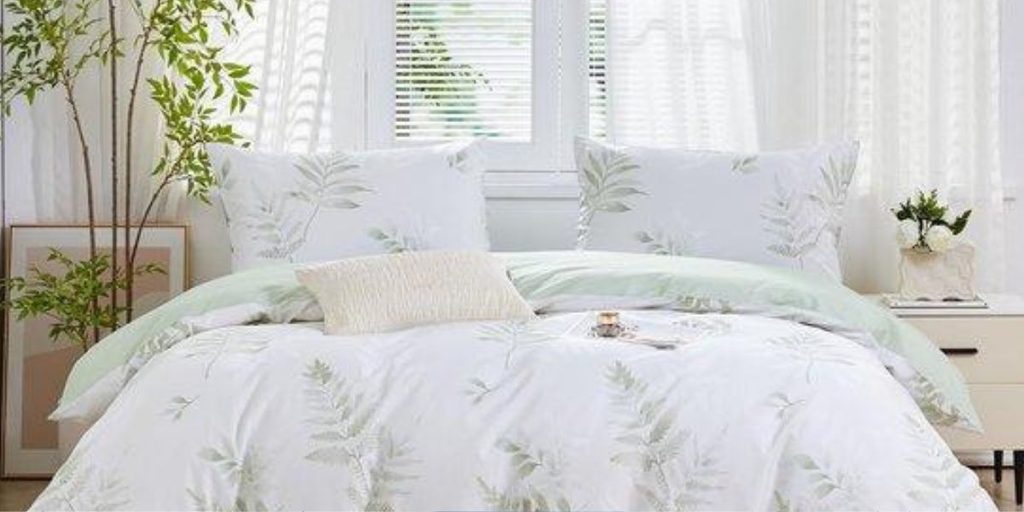
You do not need to maintain several live plants to enjoy a greenery-inspired bedroom. Botanical bedding provides a practical alternative, especially if your room receives little daylight or you prefer low-maintenance decorating.
Choose a duvet cover with a delicate leaf pattern, green branches, or a subtle botanical print. Pair it with solid cream sheets and simple cushions to keep the bed from looking too busy.
If the bedding has a large, colorful pattern, keep the curtains and other textiles relatively understated. For a more minimalist appearance, select small green motifs against a white or beige background.
You can complete the look with framed botanical artwork or a single healthy indoor plant.
Styling tip: Let one botanical pattern become the main feature. Mixing several competing leaf prints can make the bedroom feel visually crowded.
5. Add Greenery to Bedroom Shelves
maggiemeadow.com
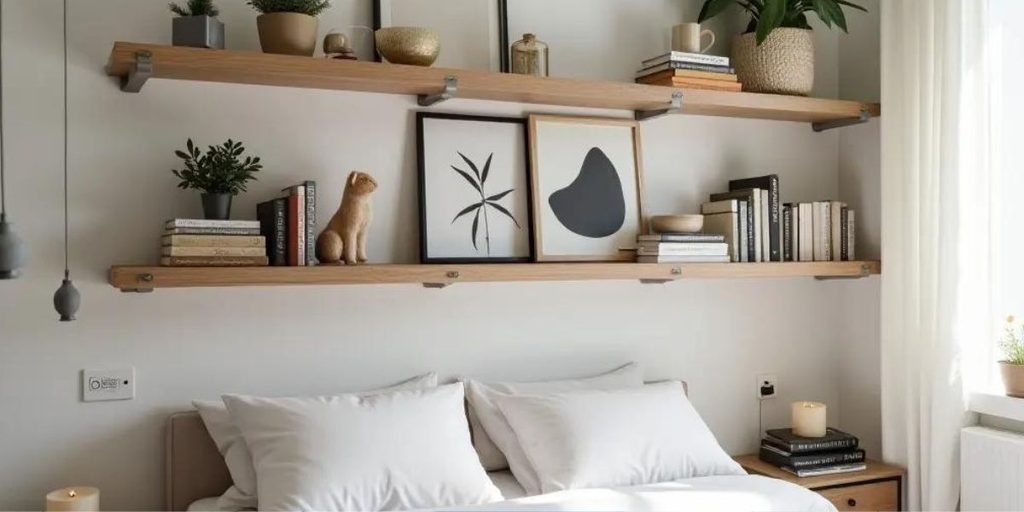
Bedroom shelves offer a useful place for greenery when floor space is limited. A small plant beside a book, framed print, or ceramic object can make an otherwise plain shelf look more intentional.
Vary the heights and shapes of the objects instead of arranging everything in one straight line. For example, combine a compact plant, a low decorative bowl, and a framed botanical print while leaving some space around them.
Choose plants that suit the light level at shelf height. A shelf near a bright window may offer different conditions from one positioned across the room.
Make sure the shelf and its mounting hardware can support the combined weight of the pot, soil, water, and plant. Use a suitable waterproof tray to protect the surface from moisture.
Styling tip: Keep the number of objects limited. The goal is to create a small decorative arrangement, not to fill every available inch.
6. Design a Green Accent Wall Behind the Bed
wildfoxpainting.com
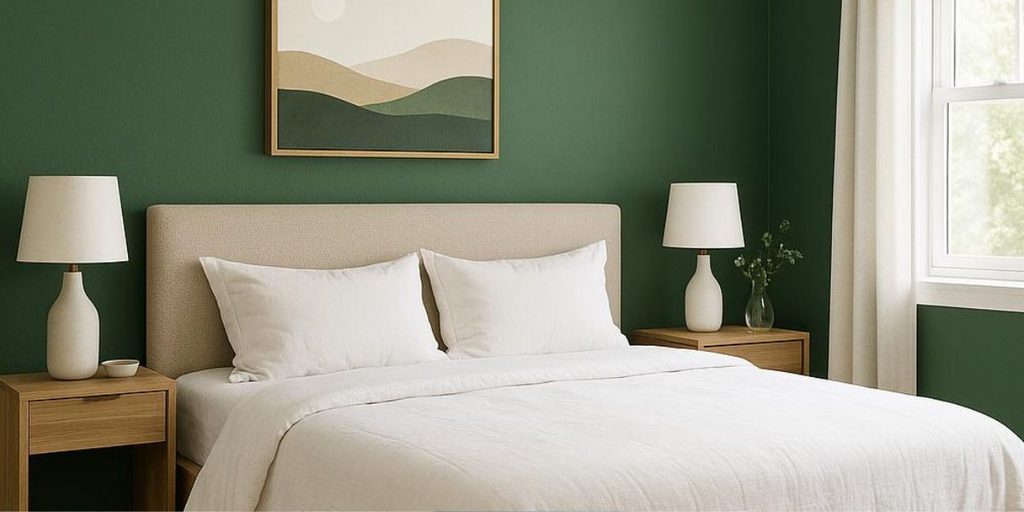
A green accent wall can make the bed the natural focal point of a bedroom. Deep forest green creates a rich, dramatic appearance, while muted olive and sage produce a softer effect.
Painting only the wall behind the headboard can introduce color without making the entire room feel dark. Pair a deeper green with cream bedding, warm wood, and soft lighting. If you prefer a lighter room, choose a pale green shade and use white or beige furnishings.
You can also create a similar effect with removable wallpaper or botanical wall art if painting is not an option.
Consider the room’s lighting before selecting a paint color. A shade that looks bright in a well-lit store may appear much darker in a bedroom with a small window.
Styling tip: Use two or three complementary colors throughout the room instead of introducing many unrelated shades.
7. Choose Natural Textures for a Relaxed Look
housebeautiful.com
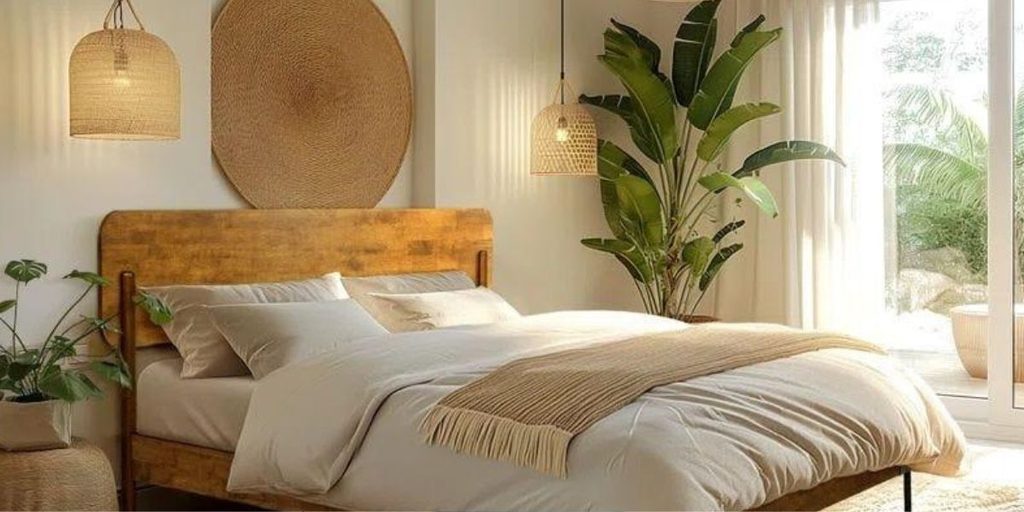
Greenery looks especially inviting when combined with materials inspired by nature. Wood, linen, cotton, jute, rattan, and woven baskets add texture without relying on strong colors or elaborate decorations.
For example, a wooden bed frame, cream linen bedding, and a woven rug can provide a warm foundation for green plants and botanical artwork. A basket may also serve as an attractive outer cover for a suitable plant container.
Texture matters because a room decorated entirely in flat surfaces can feel plain, even when the colors coordinate. Combining a few different materials gives the bedroom depth while preserving a simple appearance.
You do not need to replace your furniture. Start with a textured cushion cover, a natural-fiber rug, or a wooden tray for the bedside table.
Styling tip: Repeat natural materials in two or three places to create visual consistency without making the room look themed.
8. Make a Small Bedroom Feel Greener Without Losing Space
nieuwesfeer.nl
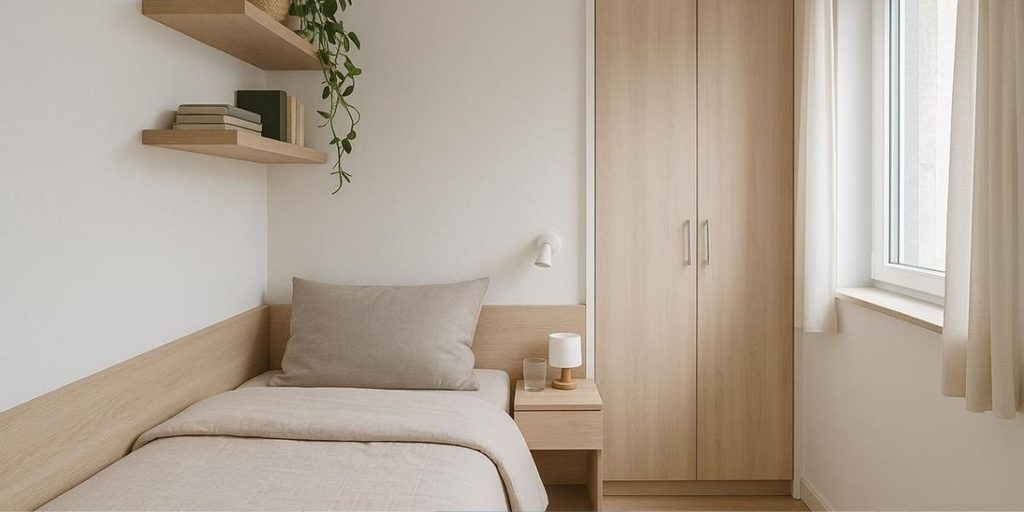
Small bedrooms require a different approach because every piece of furniture and every plant occupies valuable space. The most effective greenery bedroom ideas use walls, windowsills, and existing furniture instead of adding large floor planters.
Start by choosing one or two compact plants that suit the available light. Place one on a stable shelf or dresser and another on a suitable windowsill if enough room remains.
Keep the floor clear around the bed, wardrobe, and doorway. Avoid large decorative pots in narrow walking paths, and choose planters that fit comfortably on existing surfaces.
Light-colored bedding, simple curtains, and uncluttered furniture can help the room feel more open. You can reinforce the greenery theme with sage cushions or botanical artwork instead of adding more live plants.
Styling tip: In a small room, a few well-placed green accents often look better than a large collection of plants.
9. Create a Cozy Green Bedroom With Layered Bedding
japandi-stijl.nl
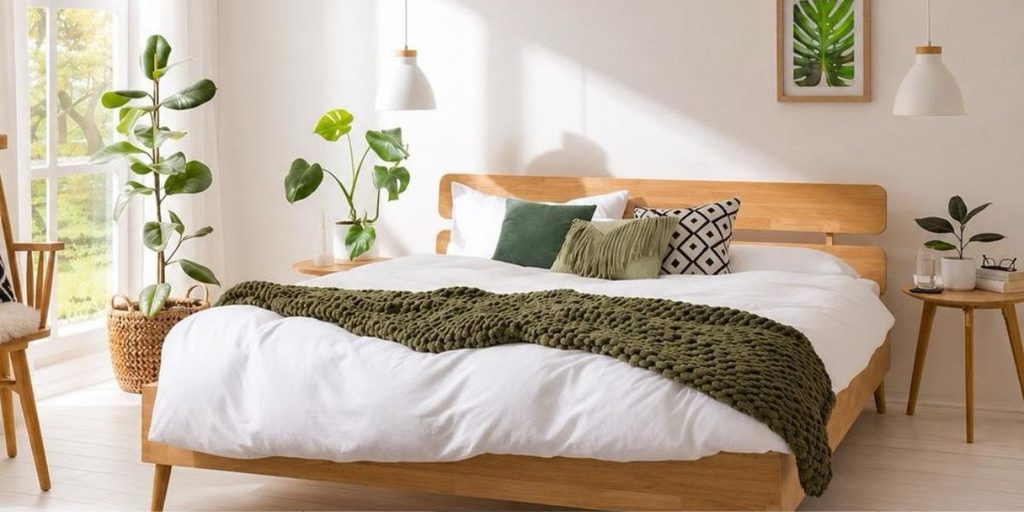
Layered bedding is an easy way to make a bedroom feel comfortable and visually complete. Start with white or cream sheets, add a green duvet or quilt, and finish with a textured throw and a small number of coordinating cushions.
Olive, moss, and muted sage work well with warm neutrals. Darker greens can create a stronger contrast, while lighter shades are useful when you want to preserve a bright and airy appearance.
Pay attention to texture as well as color. Cotton sheets, a knitted throw, and linen cushions can create a layered effect without requiring complicated patterns.
Keep the arrangement practical enough for everyday use. Too many decorative pillows can become inconvenient when making the bed or preparing for sleep.
Styling tip: Choose one dominant green textile and repeat its shade in a smaller accessory elsewhere in the room.
10. Add Botanical Artwork Above the Headboard
Botanical artwork offers a simple way to introduce greenery without taking up floor or shelf space. Framed leaf illustrations, plant photographs, and nature-inspired prints can complement both modern and traditional bedrooms.
For a coordinated appearance, select artwork that shares a few colors with the bedding or curtains. Green and cream prints work well with neutral interiors, while darker botanical illustrations can create contrast against pale walls.
A single large print can make a strong statement, while two or three smaller frames can create a balanced arrangement above a dresser or headboard.
Hang artwork securely and avoid placing heavy frames where they could fall onto the bed. If you rent, removable hanging solutions may be useful when appropriate for the wall surface and frame weight.
Styling tip: Match the frame finish to existing furniture or hardware so the artwork feels connected to the rest of the bedroom.
11. Use Warm Lighting to Complement Green Decor
oakstudiodesigns.com
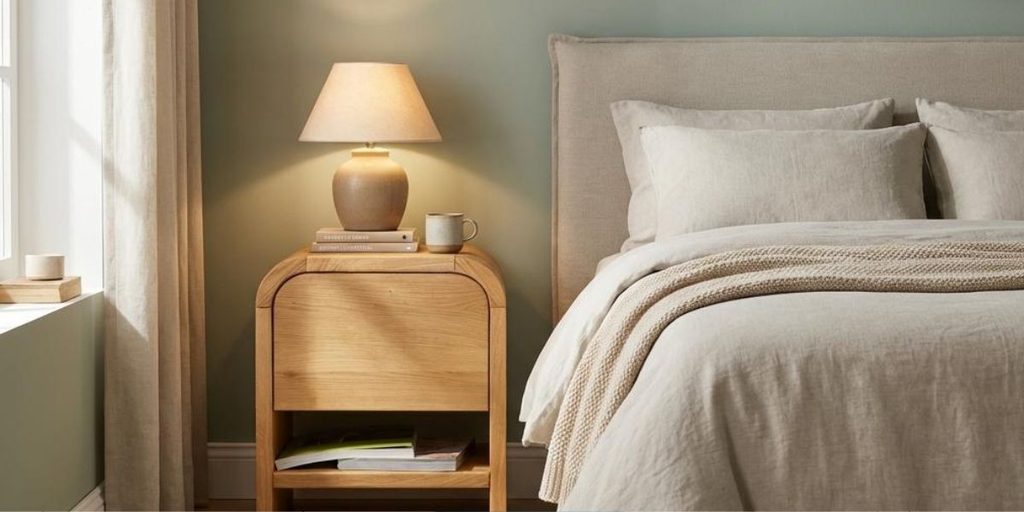
Lighting can change how green paint, bedding, and plant leaves appear throughout the day. A room that looks fresh in natural daylight may feel cooler or darker under an unsuitable artificial light.
A bedside lamp with a warm-toned bulb can create a comfortable evening atmosphere. Table lamps, wall lights, and floor lamps can also help distribute light more evenly than relying on one overhead fixture.
If the bedroom has limited natural light, use lighting to make the room functional and visually inviting rather than assuming plants will thrive there. Live plants still need suitable light for their species, and decorative lighting may not provide what they require for healthy growth.
Consider task lighting for reading and softer ambient lighting for relaxing. Keep cables organized and place lamps where they will not interfere with movement around the bed.
Styling tip: Test your room’s lighting at both daytime and evening hours before making major color or decor decisions.
12. Try a Modern Boho Greenery Bedroom
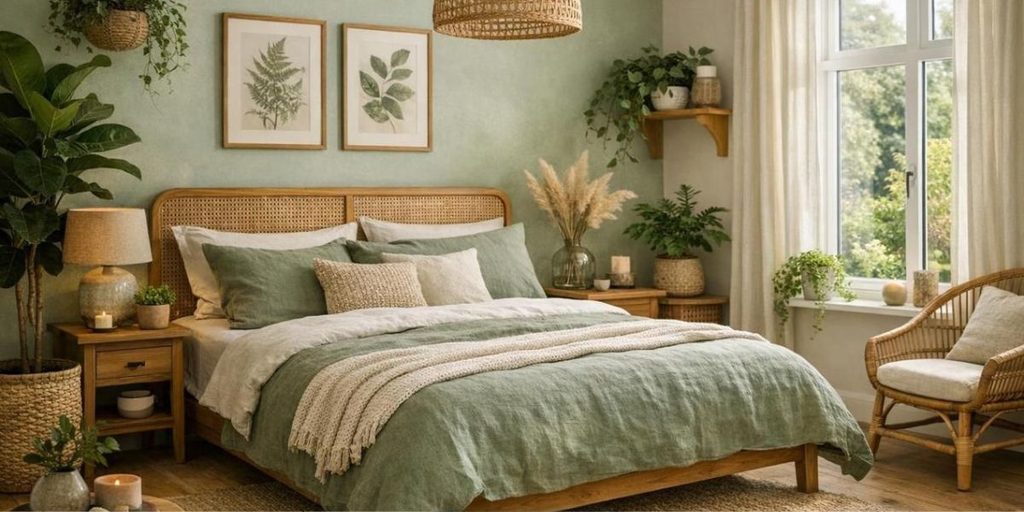
bookabuilderuk.com
A modern boho bedroom combines relaxed textures, natural materials, and personal decorative touches. Green plants work well with rattan, woven rugs, wooden furniture, and soft bedding.
Start with a neutral foundation, such as cream walls and natural wood. Add a leafy plant, a textured throw, and one or two decorative objects that reflect your style.
The look does not require a large number of accessories. In fact, a restrained selection of materials can make a bedroom feel more thoughtful and easier to maintain.
If you enjoy patterned textiles, introduce one patterned cushion or rug and keep the remaining fabrics relatively simple. This creates interest without competing with the greenery.
Styling tip: Combine smooth surfaces with woven or knitted textures, and repeat one shade of green to keep the overall design cohesive.
13. Create a Minimalist Greenery Bedroom
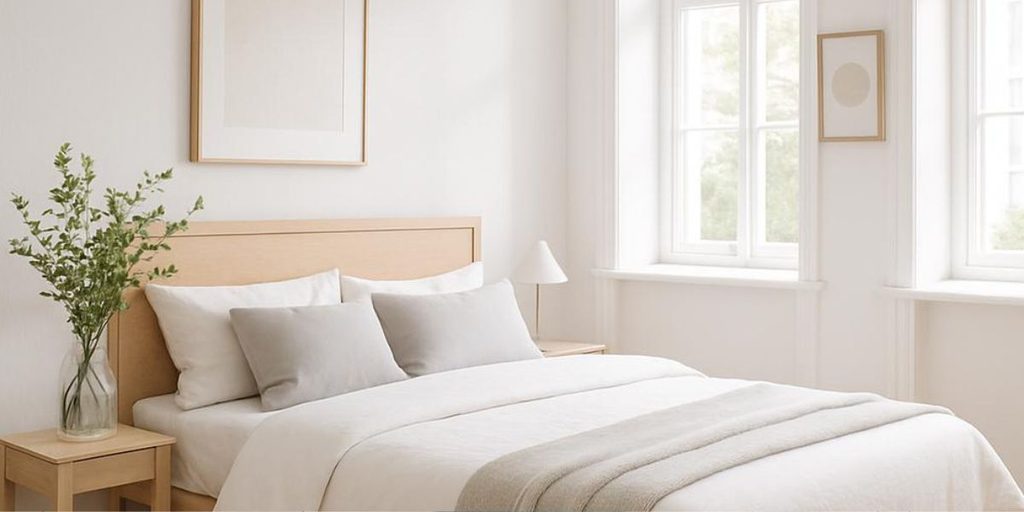
ethicalbedding.com
A minimalist greenery bedroom is ideal for anyone who prefers a clean, uncluttered space. Instead of decorating every surface, choose a few items that contribute to the room’s appearance or daily function.
A simple bed frame, neutral bedding, one leafy plant, and a small piece of botanical artwork can be enough. Keep bedside tables clear except for the objects you use regularly.
This style also makes cleaning easier because fewer decorative items collect dust and need to be moved. Choose furniture with practical storage if clutter tends to accumulate.
The green elements should complement the room rather than dominate it. A single plant or a muted green throw can provide the necessary color.
Styling tip: Before purchasing new decor, remove items that no longer serve a purpose and see whether the room already has enough greenery.
14. Bring Greenery Into a Rental Bedroom
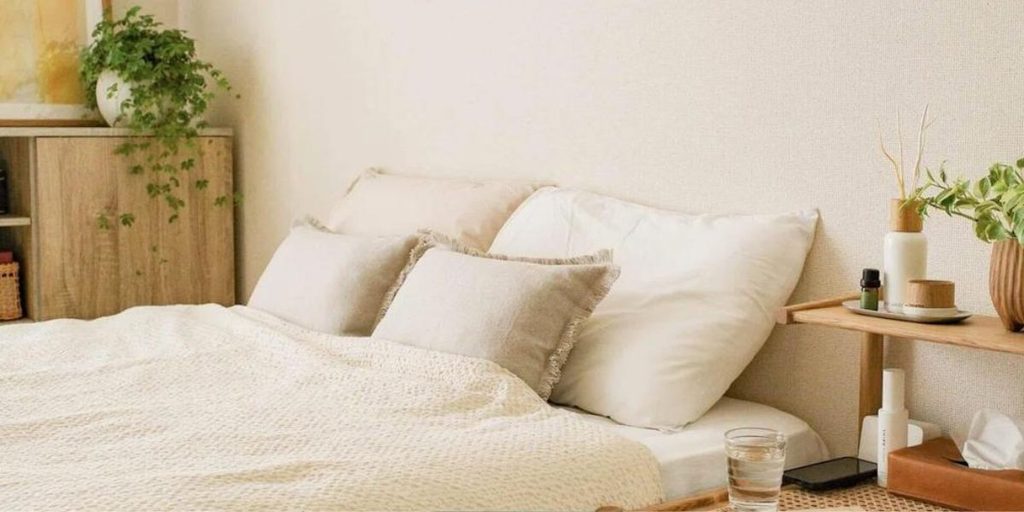
note.com
Renters can create a greenery-inspired bedroom without making permanent changes. Potted plants, botanical prints, green cushions, and freestanding plant stands allow you to refresh the space while keeping the original walls and furniture intact.
Use existing shelves and furniture wherever possible. If you want to display artwork, select a hanging method suitable for the frame weight and wall surface, and check the rental agreement before drilling.
A green throw blanket or a botanical duvet cover can change the room’s appearance without requiring paint. Small planters can also be moved when you change rooms or rearrange the furniture.
Protect windowsills, dressers, and floors from water damage by using appropriate trays beneath plant containers.
Styling tip: Choose decor that can move with you, especially if you expect to change homes in the near future.
15. Build a Low-Maintenance Greenery Bedroom
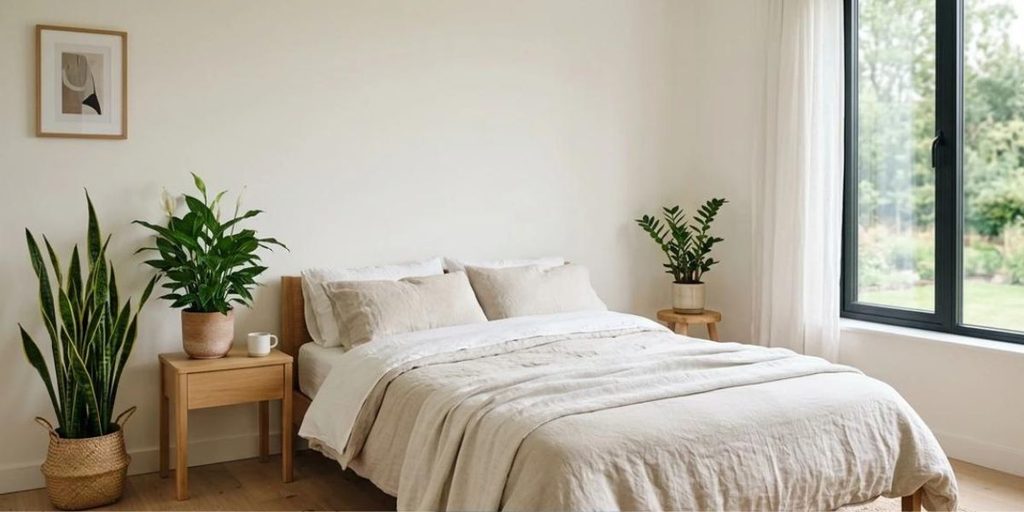
kinnisvara24.ee
A beautiful bedroom should be practical to maintain. If you have a busy schedule, start with a small number of plants rather than buying many at once.
Choose plants according to the light available in your bedroom and learn their individual watering requirements. Avoid watering on a fixed schedule without checking the soil and the plant’s needs, because excessive moisture can damage roots and encourage problems such as fungus gnats.
Use containers with suitable drainage and protect furniture from water. Remove dead leaves when needed and inspect plants occasionally for pests.
If the bedroom does not provide suitable growing conditions, botanical prints, green textiles, or realistic artificial plants can create a similar visual effect without the same care requirements.
If you have pets, check whether each plant species is safe for them before bringing it home.
Styling tip: A small, healthy collection is generally easier to manage than a crowded assortment of plants with different care needs.
How to Choose the Right Greenery for Your Bedroom
Before buying plants or changing your decor, consider the room’s size, lighting, budget, and existing furniture. These factors help you select ideas that will work in your actual space rather than only in photographs.
| Bedroom situation | Practical approach |
|---|---|
| Small bedroom | Use compact plants, shelves, and botanical artwork |
| Bright window | Select plants suited to the available light |
| Low-light room | Choose tolerant species or use green decor instead |
| Neutral bedroom | Add sage, olive, or forest-green accents |
| Rental property | Use portable planters and removable decor |
| Busy schedule | Start with one or two easy-to-maintain plants |
| Pet-friendly home | Check plant toxicity before purchasing |
Remember that no single plant is suitable for every bedroom. Light intensity, window direction, temperature, humidity, and the plant’s mature size all affect where it should be placed.
Common Mistakes to Avoid With Greenery Bedroom Ideas
Greenery can improve the look of a bedroom, but too much decoration can make the room harder to use. Keep these common mistakes in mind when planning your space.
Choosing plants without checking light: A plant that requires bright light may struggle in a dark corner. Match the species to the conditions you have.
Overcrowding the room: Too many pots can block walkways and make surfaces difficult to clean. Start with a few plants and add more only when needed.
Ignoring water protection: Leaking pots can damage wood, fabric, and flooring. Use suitable drainage and protective trays.
Mixing too many colors: Green works with many shades, but too many unrelated colors and patterns can make a room feel disconnected. Choose a small palette and repeat it throughout the space.
Buying furniture before measuring: Large plant stands and bulky furniture can overwhelm small bedrooms. Measure the available area and preserve comfortable access to the bed, wardrobe, and door.
Forgetting plant safety: Some common houseplants are toxic to pets. Research the exact species and keep potentially hazardous plants away from animals and children.
Frequently Asked Questions
1. What are the best greenery bedroom ideas for a small room?
Use compact plants, botanical bedding, framed leaf prints, or a small plant on an existing shelf. Keep the floor clear and avoid placing too many pots on bedside tables.
2. Which colors go well with greenery bedroom decor?
Cream, white, beige, natural wood, and muted gray all pair well with green. Sage creates a soft appearance, while olive and forest green provide more contrast.
3. Can I create a greenery bedroom without real plants?
Yes. Botanical artwork, leaf-print bedding, green cushions, nature-inspired wallpaper, and realistic artificial plants can all create a greenery-inspired look.
4. Where should I place plants in a bedroom?
Choose locations according to the plant’s light requirements and mature size. Windowsills, suitable shelves, and floor corners can work, provided they do not block movement or create safety hazards.
5. How can I decorate my bedroom with plants on a budget?
Start with one or two small plants, use containers you already own if they are suitable, and refresh the room with green cushion covers or botanical prints. You do not need to buy new furniture.
6. Is sage green a good color for a bedroom?
Sage green is a versatile option because it works with cream, white, beige, and wood tones. The best shade depends on the room’s natural light and the overall atmosphere you want.
7. How many plants should I put in my bedroom?
There is no fixed number. Begin with one or two plants and consider the available light, space, and maintenance requirements before adding more.
8. How do I keep bedroom plants healthy?
Provide suitable light, use containers with appropriate drainage, water according to the plant’s needs, and check periodically for pests or unhealthy leaves. Care requirements vary by species.
Final Thoughts
Greenery bedroom ideas offer a flexible way to make a bedroom feel fresh, comfortable, and personal. Whether you choose a statement plant, sage-green bedding, botanical artwork, or a combination of natural textures, the most effective design is one that suits your room and daily routine.
Start with one simple change, observe how it works with your existing furniture, and build from there. You do not need a room full of plants to create a nature-inspired retreat. A few well-chosen details can make the space feel coordinated without sacrificing comfort or functionality.